Understanding Your Roofing Estimate: A Line-by-Line Breakdown (2026)
Updated for 2026 • Expert-reviewed • Homeowner-focused
Need a professional opinion? Get free quotes from local roofing pros
Compare Free Roofing QuotesA roofing estimate can look like a foreign language if you have never read one before. Some contractors provide a single lump-sum number with no detail. Others hand you a 3-page itemized document full of industry jargon. Neither extreme helps you make an informed decision. This guide breaks down every line item you should see on a professional roofing estimate, explains what each one means, what it should cost, and how to tell if you are being overcharged or if corners are being cut.
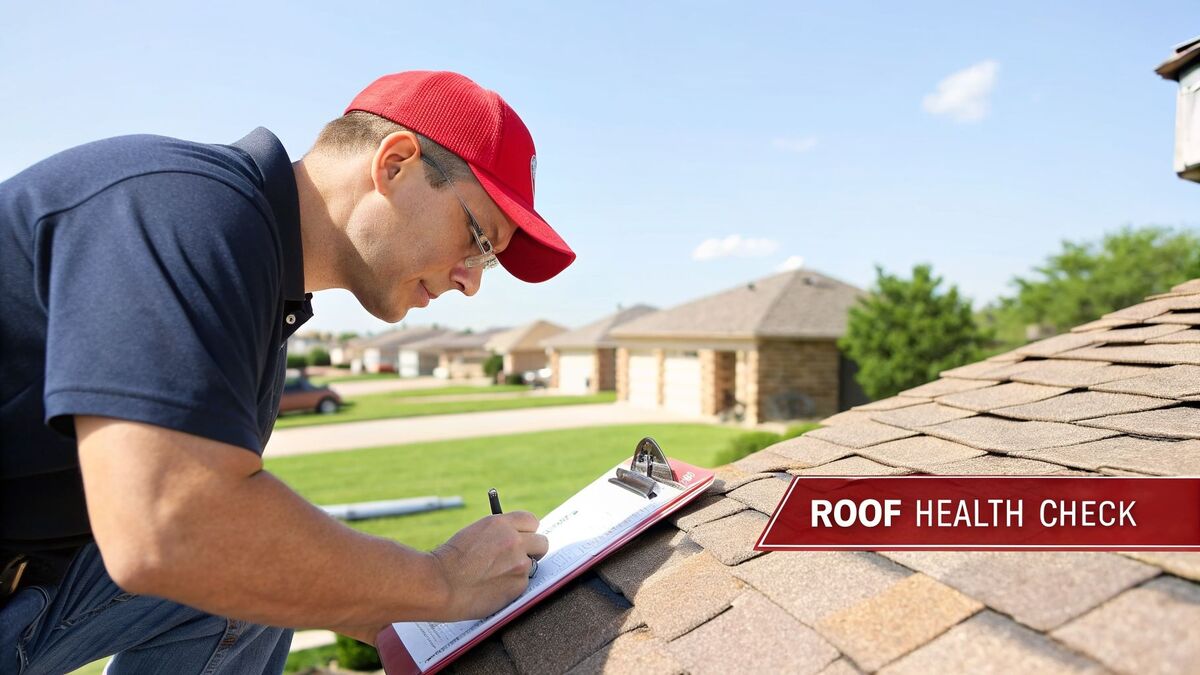
What a Professional Estimate Should Include
Before we break down individual line items, here is a baseline: any estimate worth considering should include the contractor's full business name, license number, and insurance information; a detailed scope of work; specific material brands and product names (not just "shingles"); quantities measured in roofing squares (1 square = 100 sq ft); a line-item breakdown of labor, materials, and additional costs; payment terms and schedule; warranty information; and an estimated start and completion date. If an estimate is missing more than two of these elements, request a more detailed version or consider it a red flag.
Line Item: Tear-Off and Disposal
This covers removing your existing roof down to the decking and hauling it away. It typically includes the cost of a dumpster rental, labor for removal, and dump fees.
- Typical cost: $1.00–$1.75 per square foot of roof area, or $100–$175 per roofing square
- A 20-square roof (2,000 sq ft) should run $2,000–$3,500 for tear-off and disposal
- Second layer removal costs more — if you have two layers of shingles, expect 30–50% more for tear-off
- Watch for: estimates that say "overlay" instead of tear-off. Laying new shingles over old ones is cheaper but hides problems and voids many manufacturer warranties
- The dumpster rental is usually included in this line item ($300–$600 depending on size and your area)
Line Item: Decking Repair
After tear-off, the crew inspects the plywood or OSB decking beneath the old shingles. Any sections with rot, water damage, or delamination need to be replaced. This is the most common source of "unexpected" costs, so a good estimate addresses it upfront.
- Typical cost: $75–$150 per 4x8 sheet of plywood or OSB, installed
- Good estimates include 1–2 sheets "at no additional cost" and specify a per-sheet rate beyond that
- Some contractors quote decking repair as time-and-material — this gives them no incentive to be efficient. A per-sheet rate is better for you.
- If your roof has had leaks, expect more decking replacement. Ask the contractor to estimate worst-case during inspection.
- Watch for: estimates with no mention of decking at all. This means you will get a surprise bill on Day 1.
Line Item: Underlayment
The underlayment is a waterproof or water-resistant barrier installed over the decking before shingles go on. It is your roof's secondary defense against water infiltration.
- Synthetic underlayment (preferred): $0.15–$0.35 per sq ft — more durable, tear-resistant, and lays flatter than felt
- Felt paper (15-lb or 30-lb): $0.05–$0.15 per sq ft — cheaper but tears easily, wrinkles in heat, and degrades faster
- Ice and water shield (self-adhering membrane): $0.50–$1.50 per sq ft — required at eaves, valleys, and penetrations in most building codes
- A quality estimate specifies the type and brand of underlayment. "Underlayment — included" with no detail is a yellow flag.
- Building code in cold climates typically requires ice and water shield from the eave edge to at least 24 inches past the interior wall line.
Line Item: Shingles (Material and Installation)
This is usually the largest line item. It includes the cost of the shingles themselves and the labor to install them. The estimate should specify the exact product — not just "architectural shingles" but the brand and product line.
- 3-tab shingles: $80–$130 per square (material) + $60–$80 per square (labor) — rarely recommended anymore due to shorter lifespan
- Architectural shingles (GAF Timberline, Owens Corning Duration, CertainTeed Landmark): $100–$180 per square (material) + $70–$100 per square (labor)
- Premium/designer shingles (GAF Grand Canyon, CertainTeed Grand Manor): $200–$400 per square (material) + $80–$120 per square (labor)
- The estimate should list the number of squares needed — a typical 2,000 sq ft home needs 20–25 squares depending on roof pitch and waste factor
- Watch for: estimates that don't name the specific product. "Architectural shingles" covers a huge price range. Pin down the exact product line.
- Material waste factor of 10–15% is standard. A 20-square roof will need 22–23 squares of material to account for cuts and hip/ridge waste.
Line Item: Flashing, Drip Edge, and Penetration Sealing
Flashing is the metal that seals the joints where the roof meets walls, chimneys, skylights, and plumbing vents. This is where most leaks originate, so proper flashing is critical.
- Drip edge (aluminum): $1.50–$3.00 per linear foot — installed along eaves and rakes
- Step flashing (where roof meets a wall): $5–$10 per linear foot
- Chimney flashing (counter flashing and step flashing): $300–$800 per chimney
- Pipe boot replacement (plumbing vent seals): $15–$75 each — always replace these, never reuse old ones
- Skylight flashing kit: $200–$500 per skylight
- Watch for: estimates that say "reuse existing flashing." Reusing old step flashing or pipe boots is the most common cause of leaks on new roofs. Insist on new flashing throughout.
Line Item: Ventilation
Proper attic ventilation is essential for shingle longevity and energy efficiency. Your estimate should address both intake (soffit vents) and exhaust (ridge vent or other exhaust type).
- Ridge vent: $3–$6 per linear foot — the gold standard for exhaust ventilation
- Box vents (static exhaust vents): $50–$100 each installed — less effective than ridge vent but sometimes necessary on hip roofs
- Power attic ventilators: $200–$500 each — generally NOT recommended by roofing manufacturers as they can create negative pressure and pull conditioned air from the living space
- Soffit vents: $3–$8 per linear foot if new or additional soffit venting is needed
- The ratio of intake to exhaust should be roughly balanced. A common mistake is installing a new ridge vent without adequate soffit intake — this makes the ridge vent nearly useless.
- Watch for: estimates with no mention of ventilation at all. Inadequate ventilation voids most manufacturer warranties and cuts shingle life by 25–40%.
Line Item: Permits and Inspections
Most municipalities require a building permit for roof replacement. The contractor should handle this. If they suggest skipping the permit to save time or money, that is a serious red flag — unpermitted work can create problems when you sell your home and leaves you with no recourse if the work is defective.
- Permit cost: $100–$500 depending on your municipality
- Some contractors include this in their bid; others list it separately. Either way, it should be addressed.
- The permit triggers a final building inspection, which is a free quality check on the contractor's work — this protects you.
How to Spot an Inflated Estimate
Compare the total price against the per-square average for your area and material. As a general benchmark for asphalt architectural shingles in 2026: total installed cost should be $350–$600 per square for a straightforward roof, or $500–$800 per square for complex roofs with steep pitch, multiple dormers, or difficult access. If the estimate significantly exceeds these ranges without a clear explanation (material upgrade, excessive decking damage, extreme roof complexity), ask the contractor to justify the difference. A reputable contractor will walk you through it.
Ready to Get Real Quotes?
Compare Free Roofing Quotes Near YouKey Takeaways
- A professional estimate should itemize tear-off, decking, underlayment, shingles, flashing, ventilation, and permits separately
- Always insist on specific material brands and product names — not generic descriptions
- Flashing and pipe boots should ALWAYS be replaced, never reused — this is where most new-roof leaks start
- Good estimates include a decking repair allowance (1–2 sheets included) and a clear per-sheet rate beyond that
- Benchmark: $350–$600 per square installed for standard architectural shingles in 2026
Frequently Asked Questions
Get Free Quotes from Local Roofing Pros
Compare estimates, warranties, and timelines from contractors in your area. 100% free and no obligation.
100% Free Service
No hidden fees for homeowners.
Local Matching
We connect you with contractors in your ZIP code area.
Better Pricing
Comparing bids can save you 15-25% on your total project cost.